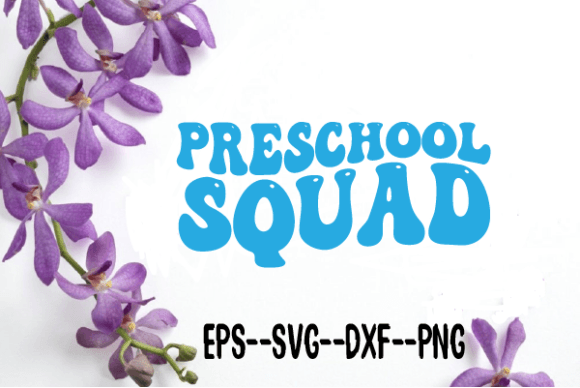
Preschool Squad New Wavy Retro Svg Review
As a designer who spends more time than I care to admit staring at stitch charts and testing thread tensions, I approach every new digital asset with a mix of curiosity and skepticism. When I first pulled up Preschool Squad New Wavy Retro Svg, my initial reaction was one of cautious optimism. The retro wave aesthetic is everywhere right now, but finding a design that balances nostalgia with modern embroidery viability is harder than it looks. This isn't just about how the vector looks on a screen; it’s about whether it translates into a tangible, high-quality handmade product that customers will actually want to wear or display.
I decided to put this file through its paces, not by simply opening it in software, but by visualizing it in real-world scenarios. Specifically, I wanted to see how this embroidery project would perform on custom apparel and small shop merchandise. The goal was to determine if this embroidery file has the staying power for a serious craft business or if it remains a fleeting trend best left as a simple print.
First Impressions and Visual Personality
The moment you load the file, the mood is clear: playful, nostalgic, and energetic. The "wavy retro" style inherently suggests movement, which can be tricky in static embroidery. However, the lines appear bold enough to hold their shape without becoming muddy. For an Etsy seller or a small shop product creator, this visual personality is gold. It taps into the current demand for vintage-inspired aesthetics while remaining clean enough for professional application.
The layout feels balanced, avoiding the cluttered look that often plagues retro designs. This clarity is crucial because it allows the stitching technique to shine. Whether you plan to use this as a standalone statement piece or integrate it into a larger collection of design assets, the graphic stands on its own. It screams "fun," making it an ideal candidate for personalized gift items where emotional connection drives the purchase.
Real-World Application: The Tote Bag Test
To truly judge an embroidery design, you have to imagine it on fabric. My mental test case involved a heavy canvas tote bag intended for a back-to-school boutique line. The prompt suggests using this for sublimation, but as an embroidery reviewer, I focused on its potential as a machine embroidery design. Imagine this wavy text stitched onto a natural beige canvas tote. The contrast between the dark thread and the neutral background would pop beautifully.
This specific design works exceptionally well for tote bag design applications because the horizontal flow of the waves guides the eye across the bag without overwhelming the structure. It doesn’t fight the seams or the handles. Furthermore, for those looking to expand into sweatshirt embroidery, the retro vibe pairs perfectly with oversized fits popular among Gen Z and millennials. It transforms a basic garment into a curated fashion statement, elevating the perceived value of the finished product.
Baby Items and Nursery Decor
Another strong use case lies in the realm of baby embroidery. The soft curves and friendly typography make this suitable for baby onesies, burp cloths, or nursery wall art. When digitizing or preparing this for stitching, the softer edges of the retro font translate well to the gentle textures of cotton or muslin. It avoids the harshness of blocky fonts, creating a warmer, more inviting aesthetic that parents love. This versatility makes it a valuable addition to any commercial embroidery portfolio targeting new families.
Technical Considerations and Stitch Quality
No matter how pretty a vector is, if it doesn’t stitch well, it fails. Here is where practical judgment comes in. The wavy nature of the design means you need to pay close attention to stitch density. If the fill stitch is too dense, the fabric may pucker, ruining the sleek retro look. Conversely, if it is too sparse, the underlying fabric might show through, looking cheap.
I recommend reviewing the stabilizer choice carefully. For stretchy fabrics like t-shirt knits, a cut-away stabilizer is non-negotiable to prevent distortion over time. For structured items like caps or aprons, a tear-away might suffice, but always test first. The design likely relies heavily on satin stitches for outlines and fill stitches for the body. Ensure your digitizing software interprets the curves smoothly; jagged satin stitches can detract from the smooth, flowing lines that define the retro style.
Also, consider the thread colors. A retro design often benefits from muted, earthy tones or vibrant pastels rather than neon brights, depending on the target audience. Testing in black and white mockups helps ensure that the contrast levels are sufficient for readability, regardless of the color palette you eventually choose.
Where to Use Carefully
While this design has broad appeal, there are limitations. Avoid placing this on highly textured fabrics like bouclé or thick fleece, as the details will get lost. Similarly, on very thin fabrics, the weight of the thread might cause perforation or tearing over time. If you are attempting an embroidered patch, ensure the backing material is sturdy enough to support the design’s dimensions.
Small hoop sizes are also a risk factor. If the design is scaled down too much, the "wavy" elements may merge into a solid blob, losing the intricate detail that makes it appealing. Always check the minimum recommended hoop size before committing to a tiny placement on a child’s hat or a delicate accessory. Additionally, be mindful of curved surfaces like baseball caps; while possible, complex wavy lines can distort if the cap’s curvature isn’t accounted for during digitization.
Final Verdict for Creators
Preschool Squad New Wavy Retro Svg is a strong contender for designers looking to add a trendy yet timeless element to their offerings. It bridges the gap between casual craft projects and professional-grade merchandise. Its adaptability across various categories—from kitchen towels and pillow covers to custom apparel—makes it a versatile tool in your toolkit.
However, success depends on execution. Do not skip the scrap fabric tests. Verify that the stitch density is appropriate for your chosen material. Confirm licensing terms before listing any digital product or selling finished goods, as commercial rights vary. By treating this file with the respect due a professional machine embroidery design, you can create stunning handmade products that resonate with buyers and stand out in a crowded marketplace. For the creative entrepreneur willing to invest time in quality control, this design offers significant return potential.